Review: My First St. Patrick's Day SVG for Embroidery
As a designer who spends more time staring at stitch simulations than most people care to admit, I approach every new digital embroidery file with a mix of optimism and skepticism. When I first pulled up the My First St. Patrick s Day - Svg on my screen, I wasn't just looking at a cute graphic; I was mentally mapping out how those vectors would translate into thread. For those of us running a craft business or selling on Etsy, the difference between a flat image and a successful machine embroidery design often comes down to how well the source file handles conversion and simplification.
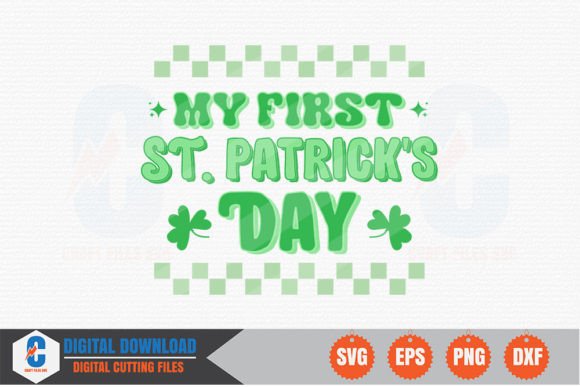
This particular asset falls under the Crafts and Graphics categories, but its real value lies in its potential as a holiday embroidery centerpiece. The retro vibe mentioned in the description suggests a bold, clean aesthetic, which is usually a good sign for stitching. Complex gradients and tiny details often get lost under the needle, but a retro style typically relies on strong shapes and clear lines. My first impression was that this design has the visual personality needed for a standout personalized gift, provided the digitizer respects the original geometry.
From Vector to Thread: A Real-World Scenario
To truly test the viability of this design, I imagined a specific project: a custom sweatshirt embroidery order for a local boutique. The client wanted a cozy, vintage-inspired look for a toddler's outfit to celebrate their first March 17th. Using the My First St. Patrick s Day - Svg as the base, the goal was to create something that felt handmade yet professional. Because the file is described as "100 Editable" and "100 Color Changeable," I had the freedom to adjust the palette before even thinking about hoops.
In a real production environment, you rarely use the default colors. For this baby embroidery project, I swapped the standard bright greens for a muted sage and a creamy off-white to enhance that retro feel. The ability to manipulate the SVG file before importing it into embroidery software is crucial. It allows you to separate elements if you plan to use an applique design technique or simplify layers to reduce stitch density. If you are an Etsy seller, offering these customization options can significantly increase the perceived value of your finished product.
Navigating Fabric and Hoop Constraints
One of the most critical aspects of using any embroidery project asset is understanding where it fits physically. While the My First St. Patrick s Day - Svg looks great on a monitor, placing it on a curved surface like a cap or a textured tote bag design requires careful planning. If you are working with stretchy fabrics, such as jersey knits for baby onesies, the stability of the design becomes paramount. You must ensure that the converted stitches do not pull or distort the fabric.
For smaller items, like an embroidered patch or a pocket detail, you need to verify the hoop size compatibility. Retro designs often feature bold lettering or thick outlines, which is advantageous here. However, if the design includes fine details, they might vanish on a small hoop or become muddy on a high-pile fabric like a hooded sweatshirt. Always test the design on scrap fabric that matches your final material. This step is non-negotiable for maintaining brand consistency and customer trust.
When dealing with dark fabrics, the contrast of your thread colors becomes the defining factor. A retro design relies heavily on color blocking. If the original SVG has elements that are too close in value, they might blend together once stitched. I recommend creating black-and-white mockups of the design before purchasing or stitching to check for clarity. This simple trick helps you anticipate how the satin stitch or fill stitch areas will read from a distance.
Commercial Viability and Design Assets
For creative entrepreneurs and small shop product creators, the licensing and versatility of a file are just as important as its aesthetics. The description notes that the item contains a zip with separate files in SVG, EPS, DXF, and PNG formats. This variety is excellent for a multi-channel business. You can use the PNG for printable mockup listings on your online store while reserving the vector formats for actual production. However, always confirm the specific licensing terms regarding commercial use before selling finished items or digital derivatives.
The "100 Editable" claim is a significant selling point. In the world of commercial embroidery, clients often request slight tweaks—a different font, a added name, or a modified color scheme. Having a fully editable vector source means you aren't stuck with a rigid image. You can adapt the My First St. Patrick s Day - Svg to fit various custom apparel needs, from kitchen towels to nursery decor. This flexibility directly impacts your buyer engagement and ability to fulfill diverse orders without starting from scratch.
Final Thoughts on Stitching Clarity and Appeal
Ultimately, the success of this design in a real-world setting depends on the translation from screen to stitch. A retro theme generally forgives minor imperfections better than hyper-realistic art, making it a safe bet for hobbyists and professionals alike. The bold shapes likely convert well into running stitch outlines or dense fill areas, ensuring durability through washes—a key concern for baby items and frequently used handmade products.
If you are considering this for your next holiday gift run or boutique collection, pay attention to the stabilizer choice. A cut-away stabilizer is often best for stretchy garments to prevent shifting, while a tear-away might suffice for stable woven cottons used in pillow covers or wall hangings. The visual appeal of the final piece will hinge on these technical decisions as much as the artistic merit of the original graphic.
In summary, the My First St. Patrick s Day - Svg offers a solid foundation for festive projects. Its retro styling aligns well with current trends in apparel decorators and maker communities. By respecting the limitations of your machinery, choosing the right materials, and leveraging the editability of the file, you can turn this digital asset into a high-quality physical product that resonates with customers. Whether you are digitizing it yourself or sending it to a professional digitizer, the potential for a charming, marketable result is definitely there.