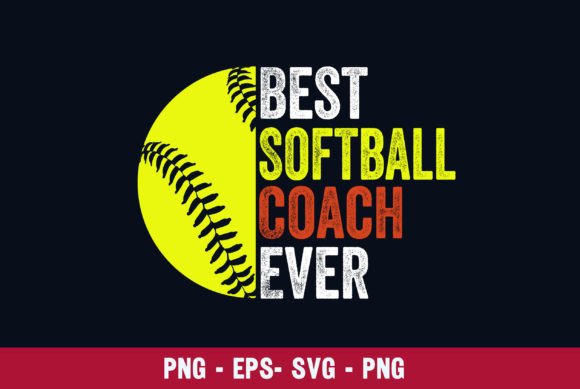
Reviewing the Best Softball Coach Ever Design
As a designer who spends more time at the hoop than away from it, I approach every new machine embroidery design with a critical eye. It is not enough for a graphic to look cute on a screen; it must translate flawlessly into thread, withstand the tension of the fabric, and hold up after multiple washes. Recently, I evaluated the Best Softball Coach Ever Softball graphic to determine its viability for real-world embroidery projects. While the product description highlights its use in planners, scrapbooking, and card making within the Crafts category, my focus was strictly on how this Graphics asset performs when digitized and stitched onto tangible goods for clients and small shop inventories.
First Impressions and Visual Personality
The initial mood of the Best Softball Coach Ever Softball design is celebratory and spirited. Visually, it carries the energetic vibe typical of sports appreciation themes, making it an immediate candidate for end-of-season gifts or team merchandise. The layout appears balanced, likely featuring bold typography paired with iconic softball imagery. For an Etsy seller or boutique owner, this visual personality is crucial because it communicates value instantly. A customer scrolling through a printable mockup or a physical display at a craft fair needs to recognize the sentiment within seconds. The design's strength lies in its clear theme; it does not rely on overly abstract elements that might get lost in translation when converted from a digital file to an embroidery file.
Real-World Application: The Custom Tote Scenario
To truly test the potential of this design, I imagined a specific real-life scenario: preparing a custom order for a local little league team looking for appreciation gifts. The client requested durable tote bag designs for five coaches. This is where the rubber meets the road. Unlike a paper planner sticker, an embroidered tote bag faces friction, weight, and outdoor elements. If I were to digitize the Best Softball Coach Ever Softball concept for this project, the placement would be central on the bag panel. The boldness of the text suggests it would read well from a distance, which is essential for a coach carrying gear across a field. However, the transition from a printable graphic to a stitched finished product requires careful consideration of stitch types. A design meant for print might rely on gradients or fine lines that do not exist in thread. Therefore, adapting this graphic would likely involve utilizing satin stitch for the lettering to ensure crisp edges and a fill stitch for any larger softball icons to provide coverage and durability.
Performance Across Different Fabrics and Items
Versatility is the hallmark of a profitable design asset. The Best Softball Coach Ever Softball motif has strong potential across various substrates. For custom apparel like sweatshirts, the design would need to be scaled up to accommodate the texture of fleece or heavy cotton blends. In contrast, for baby embroidery on a onesie, the scale would need to be significantly reduced, which brings us to a critical limitation. If the original graphic contains intricate details or very thin font strokes, shrinking it for infant wear could result in thread breaks or loss of legibility. Similarly, for an embroidered patch, the design would need a defined border, possibly using a running stitch or a dense satin border to prevent fraying over time.
When considering holiday embroidery or family reunion shirts, the design fits naturally into gift-giving narratives. However, one must be cautious with stretchy fabrics. Applying a dense design to a high-stretch jersey without proper stabilization can lead to puckering, ruining the professional look of the handmade product. For items like aprons or kitchen towels, which undergo frequent washing, the stitch density becomes a major factor. A design that is too dense may become stiff and uncomfortable, while one that is too sparse may show the fabric underneath, reducing the visual impact.
Technical Considerations for Digitizers and Makers
Before committing to production, there are several technical hurdles to clear. Since the source material is described as a printable design for planners and cards, it is almost certainly a raster or vector image intended for ink, not thread. This means you cannot simply load it into your machine. You must first verify if a pre-digitized digital embroidery file exists or if you need to hire a digitizer to convert the graphic. If you are doing the conversion yourself, pay close attention to the small details. Tiny serifs on letters or small decorative stars often disappear or become messy blobs when stitched.
It is vital to test the design on scrap fabric that matches your final project material. Check the thread colors against the fabric background; a dark thread on a dark shirt might look sophisticated in a printable mockup but invisible in real life. Contrast is key for readability. Furthermore, confirm the required hoop size. If the design is wide, it might not fit in a standard 4x4 hoop, necessitating a re-hoop or a larger machine capacity. For curved surfaces like caps, the design must be digitized specifically for that curvature to avoid distortion; a flat graphic will look warped when stitched onto a structured front panel.
Commercial Viability and Brand Consistency
For small shop products and commercial embroidery ventures, consistency builds trust. If you plan to sell items featuring the Best Softball Coach Ever Softball theme, ensure the quality of the stitch-out matches your brand promise. A sloppy stitch job with loose threads or poor registration can damage your reputation faster than a late delivery. This design, when executed correctly with appropriate stabilizer and tension settings, can elevate the perceived value of a simple t-shirt into a cherished keepsake. It fosters buyer engagement because it speaks directly to a specific niche—softball communities are tight-knit and appreciate personalized recognition.
However, a word of caution regarding licensing is necessary. Just because a graphic is available for purchase in the Crafts section does not automatically grant rights for unlimited commercial resale of physical goods or digital files. Always review the specific license terms provided by the creator. Some licenses allow for personal use only, while others permit selling a limited number of finished physical items but prohibit selling the digitized file itself. Ignoring these terms can lead to serious legal issues for your craft business.
Final Verdict for the Practical Maker
In conclusion, the Best Softball Coach Ever Softball graphic holds significant promise for creative entrepreneurs willing to put in the preparatory work. Its thematic clarity makes it a winner for seasonal rushes and team orders. However, its success depends entirely on the execution. Do not treat it as a plug-and-play solution unless a dedicated embroidery version is explicitly provided. Treat it as a strong conceptual foundation that requires thoughtful adaptation regarding stitch density, fabric choice, and sizing. By testing on scraps, respecting the limitations of thread versus ink, and ensuring proper licensing, you can transform this graphic into a high-quality personalized gift or a best-selling item in your online store. The difference between a good design and a great product is often found in the details we choose to honor during the stitching process.