Review: 123 Happy New Year SVG for Festive Embroidery
As a designer who spends more time staring at stitch simulations than most people care to admit, I approach every new digital embroidery file with a mix of excitement and skepticism. The market is flooded with holiday graphics, but finding one that translates well from a screen to a handmade product requires a keen eye. Recently, I got my hands on the 123 Happy New Year Svg T Shirt design set to evaluate its potential for real-world embroidery projects. This isn't just about whether the image looks cute on a website; it is about how those vectors hold up under the needle, how they behave on different fabric textures, and whether they can genuinely elevate a craft business inventory.
First Impressions and Visual Personality
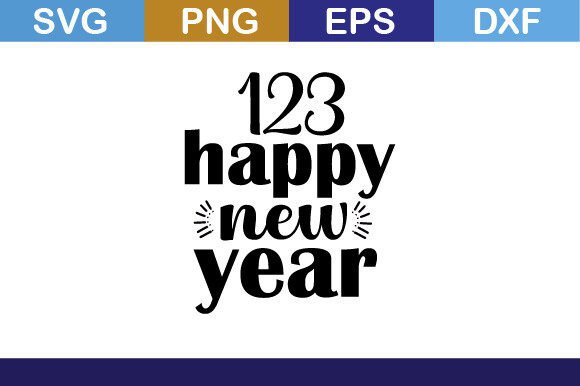
Upon extracting the ZIP file, the first thing that struck me was the versatility inherent in the package. Receiving EPS, SVG, PNG, JPEG, and DXF formats means this asset bridges the gap between pure Graphics and functional Crafts. For an embroidery specialist, the SVG and DXF files are the gateways to creating a custom machine embroidery design. The visual theme of "123" leading into "Happy New Year" suggests a playful, countdown vibe. It feels less formal than traditional script fonts and more aligned with modern, boutique aesthetics. This mood makes it an excellent candidate for custom apparel aimed at younger demographics or families looking for matching holiday embroidery outfits. The layout appears clean, which is crucial because overly complex details often get lost when scaled down for a chest pocket or a baby onesie.
Real-World Application Scenarios
To truly test the viability of the 123 Happy New Year Svg T Shirt, I envisioned a specific production run for a local boutique client. They needed a collection of sweatshirt embroidery options for their New Year's Eve party line. The goal was to create something that looked professional yet festive enough for social media photos. Using the SVG file as a base, I digitized a version optimized for a medium-weight cotton blend fleece. The result was a crisp, readable design that popped against heather grey fabric.
Beyond apparel, this design shines in the realm of home goods. I can easily see this converted into an applique design for a kitchen towel or a tote bag. The distinct separation of the numbers and the text allows for creative freedom; perhaps the "123" could be done in a contrasting satin stitch while the text utilizes a lighter fill stitch to reduce bulk. For an Etsy seller, this flexibility is gold. You aren't locked into one look. You could offer this as a personalized gift where the customer chooses the thread colors, or as a ready-to-ship small shop product on a canvas tote. The inclusion of PNG and JPEG files also aids significantly in creating printable mockup previews for online listings, allowing customers to visualize the finished product before purchasing.
Technical Considerations for Stitching
While the source files are high-quality vectors, translating them into a stitched reality requires careful planning. One major consideration is stitch density. When converting these shapes into an embroidery file, it is vital to ensure the density isn't too high, especially if you plan to stitch this on stretchy fabrics like t-shirts or baby clothes. High density can cause puckering and make the garment uncomfortable to wear. I recommend running a test on scrap fabric of the same weight you intend to use for the final item.
Another critical factor is the hoop size. Depending on how you arrange the "123" and the text, this design might require a larger hoop to maintain proper spacing without crowding. If you are attempting this on a curved surface like a cap, you must be cautious. Curved surfaces distort designs, and linear text can look warped if not digitized with pull compensation in mind. For caps, I would suggest simplifying the design or breaking it into two separate hooping steps if your machine supports it, though a single run is preferable for efficiency.
Thread color contrast is where this design lives or dies. On dark fabrics, a light metallic gold or silver thread could create a stunning celebratory effect, perfect for holiday gifts. However, on light fabrics, you need deep, rich colors to ensure readability. Always check your design in a black-and-white mockup first; if the elements blend together without color, they will likely lack definition when stitched. Additionally, pay close attention to tiny lettering. If the "Happy New Year" text is small, ensure your digitizing software uses a font style that remains legible at that scale, possibly opting for a column stitch or a simplified running stitch for the finest details.
Business Value and Customer Trust
For creative entrepreneurs and apparel decorators, the quality of your design assets directly impacts your brand reputation. Using a well-structured file like the 123 Happy New Year Svg T Shirt ensures that your commercial embroidery output looks consistent and professional. Customers trust handmade items that exhibit precision; sloppy stitching or poorly scaled designs can erode that trust quickly. This design offers a balance of whimsy and structure that appeals to buyers looking for unique, non-mass-produced items.
Furthermore, the variety of file formats included in the zip allows for diverse revenue streams. You aren't limited to physical goods. With the right licensing confirmation, these files could be sold as part of a digital bundle for other makers, used in sublimation printing for mugs, or incorporated into larger composite designs for nursery decor. The key is to understand the license terms provided with the download. Before selling any finished product or digital derivative, always verify whether the license permits commercial use, unlimited sales, or if attribution is required.
Final Verdict and Designer Notes
In conclusion, the 123 Happy New Year Svg T Shirt package is a robust resource for anyone in the Crafts and Graphics sector looking to capitalize on the New Year market. Its strength lies in its adaptability across various mediums, from embroidered patches to full-back jacket designs. However, success depends on the skill of the digitizer and the preparatory work done by the maker.
Before committing to a large batch, I strongly advise the following steps:
- Test on Scrap: Always stitch a sample on the exact fabric type you plan to sell.
- Check Stabilizer: Match your stabilizer to the fabric weight; cut-away is usually safer for stretchy knits to prevent distortion over time.
- Review Details: Zoom in on the vector paths to ensure there are no stray points that could cause machine errors.
- Confirm Licensing: Double-check the specific terms regarding resale of physical vs. digital items.
- Mockup Variety: Create previews on both light and dark backgrounds to show customers the full range of possibilities.
By treating these files as a foundation rather than a final solution, you can create exceptional personalized products that stand out in a crowded marketplace. Whether you are making a single baby embroidery item for a gift or stocking shelves for a boutique branding launch, this design has the potential to deliver high-quality results when handled with professional care.