Review: Welcome Friends Home Sign SVG for Embroidery
As a designer who spends more time staring at stitch maps than most people care to admit, I approach every new digital embroidery file with a mix of optimism and skepticism. We have all been there: you download a cute graphic, load it into your software, and realize the density is going to turn your fabric into cardboard or the tiny details will vanish under a sea of thread. That is why I took a close look at the Welcome Friends - Home Sign Svg before committing it to a client project. This isn't just about whether the image looks good on a screen; it is about how it translates into a tangible, stitched reality that holds up to wear, washing, and the critical eye of a customer.
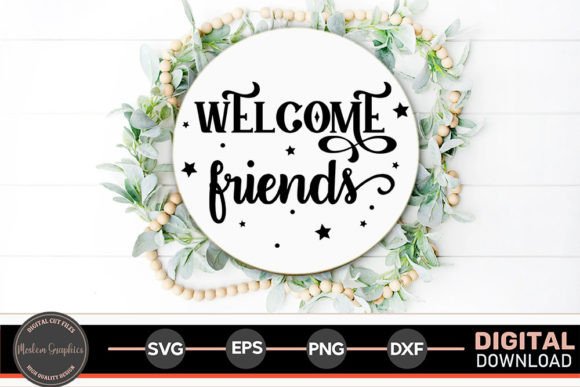
The first impression of this design is its warmth. The phrase "Welcome Friends" carries an inherent hospitality that fits perfectly with the current trend of cozy, curated home aesthetics. Visually, the layout suggests a balanced composition, likely intended to mimic a rustic wooden sign or a hand-painted plaque. For an embroidery project, this thematic element is gold. It immediately tells the viewer what the finished product is for: a space of gathering, comfort, and openness. However, as a reviewer, I have to look past the sentiment and analyze the mechanics. Does the shape work within a standard hoop? Are the lines clean enough for a satin stitch, or will they require a complex fill?
Real-World Application: The Tote Bag Test
To truly evaluate the Welcome Friends - Home Sign Svg, I imagined a specific real-life scenario that many of us face regularly: a custom order for a local boutique needing a batch of heavy-canvas tote bags. These aren't cheap promotional items; they are premium handmade products meant to be sold at a craft fair or in a small shop. The client wants something that feels artisanal but reads clearly from a distance.
In this context, the design shines. The typography in these types of graphics usually leans towards bold, friendly serif or script fonts that translate well into thick column fills or wide satin stitches. When digitizing this SVG format file (which is included in the zip alongside PNG, EPS, and DXF), the goal is to maintain that "sign" feel without making the back of the bag a mess of jump stitches. On a canvas tote, the texture of the fabric can sometimes fight with dense stitching. My advice would be to use a cut-away stabilizer rather than tear-away. Since this is a bag that will carry weight, the fabric will flex, and you do not want your beautiful "Welcome Friends" text puckering or distorting after the first grocery run.
The visual personality of this graphic also makes it an excellent candidate for a personalized gift. Imagine this stitched onto a kitchen towel or an apron for a housewarming present. The simplicity of the message allows the stitch quality to take center stage. If you are an Etsy seller, listing this as part of a "New Home" collection could be a smart move. Buyers love items that declare the purpose of a room, and this design does exactly that without being overly cluttered.
Navigating Fabric and Hoop Constraints
While the design is versatile, there are areas where caution is necessary. Not every surface is created equal. If you are planning to use this on a stretchy fabric like a jersey t-shirt or a soft baby onesie, you need to be very careful with your digitizing settings. The original files provided—SVG, PNG, EPS, and DXF—are vector and raster graphics, not pre-digitized stitch files. This means you, the operator, are responsible for converting them into a machine embroidery design that respects the fabric's grain.
For baby embroidery, less is often more. A heavy fill stitch might be too stiff for a newborn's skin. In this case, I would recommend simplifying the design elements, perhaps using a running stitch outline or a light applique technique. Speaking of applique design, this graphic is practically begging for it. Cutting the "sign" shape out of a contrasting linen or flannel and stitching it down with a tidy satin border would add incredible texture and value to the finished product. It reduces the amount of thread needed while adding a layer of dimension that flat stitching cannot achieve.
Another consideration is the hoop size. Depending on how the text is arranged, this design might require a medium to large hoop to ensure the lettering remains legible. Tiny lettering is the enemy of embroidery; if the letters are too small, the threads will merge, and the word "Friends" will become an unreadable blob. Always test the design on scrap fabric first. Check the contrast between your thread colors and the background fabric. A dark thread on a dark sweatshirt might look moody and cool in a mockup, but in real life, it might just look like a mistake unless the lighting hits it just right.
Commercial Viability and Brand Consistency
For those running a craft business, consistency is key. If you are building a brand around rustic home decor, the Welcome Friends - Home Sign Svg fits seamlessly into that narrative. It works well for holiday embroidery too; imagine swapping out the thread colors for autumn oranges and browns or festive reds and greens. The core design remains the same, but the mood shifts entirely based on your material choices.
However, before you list this as a commercial embroidery item, you must verify the licensing terms. Just because a file is labeled "ready to use" for crafting doesn't automatically grant unlimited commercial rights for resale of the digital file itself versus the physical stitched item. Always read the fine print. Assuming the license permits it, this asset is a strong contender for expanding your catalog of design assets. It appeals to a broad demographic, from new homeowners to seasoned hosts, making it a safe bet for inventory.
From a technical standpoint, when converting the DXF format or EPS format into stitches, pay attention to the corners. Sharp angles in vector graphics can cause needle breaks or thread bunching if the digitizer doesn't add enough pull compensation. Smooth out those edges in your software. Also, consider the stitch density. If the design includes any solid blocks of color, reduce the density slightly to prevent the fabric from warping. A density that is too high creates a stiff patch that stands away from the garment, which rarely looks professional on softer items like pillow covers or blankets.
Final Thoughts on Execution
Ultimately, the value of the Welcome Friends - Home Sign Svg lies in its adaptability. It is a chameleon that can dress up a plain cap, elevate a simple tea towel, or serve as the focal point of a decorative wall hanging. But its success depends entirely on the skill of the person behind the machine. Do not treat it as a "click-and-stitch" solution. Treat it as a raw material that requires your expertise to shine.
Test it in black and white mockups to check for contrast issues. Compare how it looks on light versus dark backgrounds. Ensure your stabilizer choice matches the fabric weight. These small steps separate the hobbyists from the pros. When done right, this design offers a high return on investment in terms of customer satisfaction and aesthetic appeal. It creates a finished product that feels thoughtful and welcoming, which is exactly what the modern consumer is looking for in a small shop product. Whether you are decorating your own home or fulfilling orders for a boutique, this graphic provides a solid foundation for high-quality embroidery work, provided you respect the limitations of your materials and machinery.