Crazy Cousin Crew: A Designer's Real-World Review
When I first pulled up the Crazy Cousin Crew file on my screen, my immediate reaction wasn't just about the visual appeal; it was about potential. As someone who spends hours hooping fabric, threading needles, and troubleshooting tension issues for clients, I look at every machine embroidery design through a lens of practicality. Will this stitch out cleanly? Does it have the right personality for the intended garment? And most importantly, will my customer love the finished product? This review breaks down how this specific graphic holds up when moved from a digital preview to actual thread on fabric.
First Impressions and Visual Personality
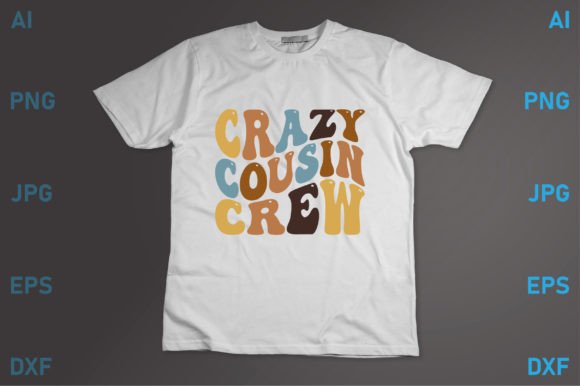
The mood of Crazy Cousin Crew is undeniably playful and energetic. It captures that chaotic, fun dynamic often found in large family gatherings or friend groups. The layout suggests a design that relies heavily on character and expression rather than intricate, microscopic detailing. For a designer, this is often a good sign. Designs that are too busy can turn into a nightmare of thread breaks and puckering, especially on stretchy materials. This graphic feels robust, with shapes that likely translate well into solid fill stitch areas and clean outlines.
Visually, it screams "custom apparel." It is the kind of image that works perfectly for matching sets. Imagine a group of cousins wearing identical hoodies for a family reunion or a vacation. The design's inherent energy makes it a standout piece for T-Shirt Designs where the goal is to create a sense of unity and fun. However, because the description notes that you can edit all elements easily, this opens up a world of customization. You aren't stuck with the default colorway. This flexibility is crucial for a craft business owner who needs to match specific brand colors or client requests without having to redraw the entire vector.
Real-World Application: The Family Reunion Scenario
To truly test the viability of Crazy Cousin Crew, let's walk through a realistic project scenario. Suppose a client approaches you two months before a summer family reunion. They want matching tees for about fifteen people, ranging from toddlers to grandparents. This is where the design shines. The theme fits the occasion perfectly, acting as a ice-breaker and a memorable keepsake.
In this scenario, you would likely be working with standard cotton or cotton-poly blend tees. The design's scale, described as substantial, means it will make a bold statement on the back of a shirt or a large center chest placement. Because the elements are editable, you could potentially add names or dates below the main graphic using your own lettering fonts, creating a truly personalized gift experience. The ease of editing ensures that if the client wants the "cousin" text in a different script or color, you can accommodate that quickly without compromising the integrity of the main image.
Beyond t-shirts, consider the versatility for a small shop product line. This graphic could easily be adapted for a tote bag design. Canvas bags handle dense stitching very well, and the playful nature of the crew would appeal to shoppers looking for unique accessories at a craft fair. It could also work as a patch. If you digitize a border around the existing elements or use a merrow edge finish, Crazy Cousin Crew becomes a durable embroidered patch that can be ironed onto denim jackets or backpacks, extending the life of the design beyond a single garment.
Technical Considerations for Stitching
While the visual appeal is strong, a professional reviewer must address the technical realities of stitching. The product description mentions a size of 18 feet by 15 feet. In the context of embroidery files, this is almost certainly a typo in the source metadata, likely meaning inches or a scalable vector dimension, as an 18-foot embroidery hoop does not exist for standard commercial machines. This discrepancy highlights a critical step in your workflow: always check your hoop size before committing to a purchase or a production run.
If you are planning to use this on a standard 5x7 or 6x10 hoop, you will need to resize the design significantly. When scaling down any digital embroidery file, you must be wary of stitch density. If the original file was intended for a massive output, shrinking it down to fit a baby onesie or a cap might cause the stitches to become too close together, leading to bird nesting or fabric distortion. Conversely, scaling it up too much might leave gaps in the coverage.
Fabric choice is another major factor. For sweatshirt embroidery, the thicker fleece provides a great foundation for this type of graphic. The texture of the sweatshirt can hide minor imperfections, and the stability of the fabric supports larger designs well. However, if you attempt this on a thin, stretchy performance tee, you must use a high-quality cut-away stabilizer. Without proper stabilization, the weight of the thread in the filled areas of the "crew" could cause the shirt to warp or hang incorrectly after washing.
Navigating Tricky Surfaces and Details
Curved surfaces present their own challenges. If you decide to place Crazy Cousin Crew on a cap, you are dealing with a highly curved, structured surface. Caps require careful hooping and often a toppper stabilizer if the fabric has a texture like twill. Ensure that any fine details in the characters' faces or accessories do not get lost in the curve. Small lettering, if included in the editable elements, should be tested separately. Tiny text often becomes illegible when stitched on textured fabrics like pique polo shirts or towels.
Speaking of towels, this design could make a fantastic holiday embroidery gift if applied to kitchen linens. However, looped terry cloth is notorious for eating small stitches. You would need to verify that the design uses sufficient underlay and perhaps a satin stitch border to anchor the graphics firmly into the loops. Always run a test stitch-out on a scrap piece of the exact same fabric you intend to use for the final product. This simple step saves money, time, and reputation.
Commercial Value and Brand Consistency
For the Etsy seller or the boutique owner, the value of a design lies not just in how it looks, but in how it sells. Crazy Cousin Crew has high "giftability." It solves a problem for customers who struggle to find cohesive outfits for groups. By offering this as a customizable option, you increase the perceived value of your handmade product.
Consistency is key in building a brand. If your shop specializes in fun, family-oriented Graphics, this design fits right in. It reinforces your brand identity as a go-to source for connection-driven apparel. Furthermore, because the file allows for easy editing, you can create variations for different seasons—perhaps adding snowflakes for winter or sunglasses for summer—without needing to buy entirely new assets. This adaptability makes it a smart investment for your library of design assets.
However, professionalism dictates that you verify the licensing terms before selling. The description mentions receiving a ZIP folder, but it cuts off before listing the specific formats or license type. Before listing this on your site as a commercial embroidery product, confirm whether the license allows for unlimited physical sales or if there are restrictions on digital redistribution. Never assume; always read the included text file in the download.
Final Verdict for the Maker
In conclusion, Crazy Cousin Crew is a spirited, versatile design that holds significant promise for real-world applications. Its strength lies in its thematic clarity and the flexibility to edit elements, making it a powerful tool for creating custom apparel and personalized items. Whether you are stitching for a one-off family gift or building inventory for a busy holiday season, this design offers a solid foundation.
Just remember to respect the technical limits of your machine and fabric. Test your tension, choose the right stabilizer, and double-check those dimensions before you hit start. With a little bit of preparation and an eye for detail, this design can help you create finished products that bring smiles to your customers and repeat business to your shop. It is a reminder that in the world of embroidery, the best designs are those that balance creative flair with stitching reality.