Stop Saying Tomorrow: A Designer's Real-World Review
As a designer who spends more time staring at stitch previews than actual fabric, I approach every new machine embroidery design with a mix of curiosity and skepticism. When I first opened the file for Stop Saying Tomorrow, my immediate reaction wasn't just about the aesthetic; it was about utility. In the world of T-Shirt Designs and Graphics, a phrase is only as good as its execution on the hoop. This review breaks down how this specific asset holds up when moved from a digital screen to a tangible, stitched reality.
The Visual Personality and First Impressions
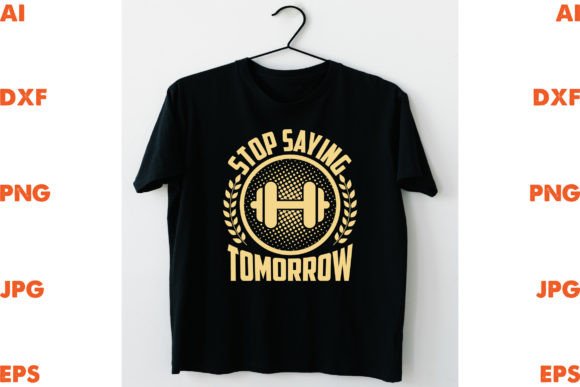
The mood of Stop Saying Tomorrow is undeniably motivational yet grounded. It avoids the overly cursive, hard-to-read scripts that often plague modern embroidery files. Instead, it leans into a bold, declarative style that suggests urgency and action. Visually, the layout feels balanced, offering enough negative space to let the letters breathe without looking sparse. For those of us creating handmade products, the visual personality here is versatile. It doesn't scream "nursery decor" exclusively, nor does it feel limited to gym wear. It sits comfortably in that sweet spot of lifestyle branding.
One thing I appreciated immediately was the apparent editability mentioned in the product details. Being able to tweak elements easily is a massive plus for custom work. Whether you are adjusting kerning for a smaller hoop or changing the flow to fit a curved surface, having control over the vector paths before they convert to stitches is crucial for professional results.
Real-World Application: The Sweatshirt Test
To truly evaluate this embroidery file, I envisioned a specific project: a high-quality, heavyweight cotton blend sweatshirt for a boutique client. This is a common request for Etsy sellers and small shop owners during the cooler months. The phrase "Stop Saying Tomorrow" fits perfectly on apparel meant to inspire daily action.
In this scenario, the design shines. On a textured fabric like French terry, the clarity of the lettering becomes the focal point. If the design utilizes a solid fill stitch for the main body of the text, it will provide excellent coverage against the looped texture of the sweatshirt. However, if the design relies heavily on running stitch outlines, one must be cautious about the fabric grain showing through. For a product like this, I would recommend pairing the design with a crisp satin stitch border if the file allows, to give it that premium, finished look that justifies a higher price point.
Beyond apparel, imagine this on a canvas tote bag design. The sturdy nature of canvas handles dense stitching well. Here, Stop Saying Tomorrow transforms a simple grocery carrier into a statement piece. It works equally well as an embroidered patch that could be ironed or sewn onto denim jackets, adding a layer of customization that customers love.
Navigating Technical Challenges and Fabric Choices
While the design concept is strong, practical application requires attention to detail. The product description notes a size of 18 feet by 15 feet. As a professional, I must pause here: this dimension is likely a digital artifact or a maximum scalable limit rather than a standard embroidery hoop size. Most home and commercial machines max out at much smaller dimensions (typically 5x7 or 6x10 inches). Before committing to a large-scale embroidery project, you must verify the actual stitchable area and scale the design down to fit your specific hoop size.
When working with stretchy fabrics, such as those used for baby embroidery or fitted tees, stitch density becomes a critical factor. If Stop Saying Tomorrow is too dense, it can cause the fabric to pucker or distort after washing. Always test the design on scrap fabric identical to your final material. For dark fabrics, ensure the thread colors provided in the palette offer sufficient contrast. A dark thread on a black shirt might look sleek in a mockup but disappear entirely in real life.
Curved surfaces present another challenge. If you plan to use this for cap embroidery, the center of the design needs to be flat enough to avoid distortion on the front panel. Complex corners or tiny serifs might not stitch out cleanly on a curved brim, so simplifying the design or increasing the size slightly might be necessary for headwear.
Enhancing Brand Value and Customer Trust
The ultimate goal of any commercial embroidery asset is to elevate the perceived value of the finished product. A clean, well-digitized design like Stop Saying Tomorrow signals professionalism. When a customer receives a personalized gift or a boutique item with crisp, clear lettering, their trust in the brand increases. Sloppy stitching or poorly scaled graphics can undermine even the best marketing efforts.
For craft business owners, consistency is key. Using a reliable design across different products—say, a matching set of a pillow cover and a kitchen towel—creates a cohesive brand identity. This design's straightforward message makes it an excellent candidate for holiday gifts or wedding favors where the sentiment needs to be instantly understood. It adds emotional weight to the item, transforming it from a commodity into a meaningful keepsake.
Practical Notes for the Studio
Before you start stitching, keep these professional tips in mind to ensure the best outcome:
- Test First: Always run a test stitch-out on scrap fabric to check for pull and registration issues.
- Stabilizer Selection: Match your stabilizer to the fabric weight. Heavy cut-away stabilizer is often best for garments that will undergo frequent washing.
- Color Contrast: Review the design in black and white mockups to ensure the shape holds up without relying on color differentiation.
- License Verification: The product mentions a ZIP folder and editability, but always confirm the licensing terms. Ensure you are cleared for commercial use if you plan to sell items featuring Stop Saying Tomorrow.
- File Formats: Since specific formats weren't listed, check the ZIP folder to ensure it includes the file type compatible with your machine (e.g., PES, DST, EXP).
In conclusion, Stop Saying Tomorrow is a robust asset for designers looking to add a touch of motivation to their catalog. Its strength lies in its adaptability across various custom apparel and home decor items. By paying attention to fabric choice, stabilizer, and scaling, you can turn this digital file into a high-value physical product that resonates with buyers. It is a reminder that in our craft, just like in the message itself, the quality of our work today defines our success tomorrow.