Garage Masters: A Bold Graphic for Custom Apparel
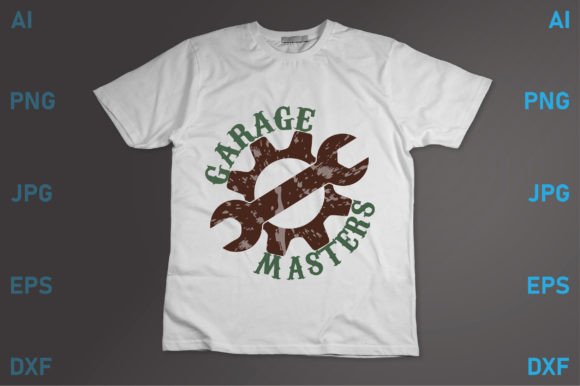
When I first pulled up the Garage Masters file on my design screen, the immediate impression was one of rugged utility and bold statement. As a designer who spends more time threading needles than browsing catalogs, I look for graphics that translate well from pixel to thread. This piece falls squarely into the T-Shirt Designs category, but its versatility as a graphic asset suggests it could anchor a wide range of handmade products. The visual personality here is distinct; it feels industrial yet approachable, making it an ideal candidate for custom apparel aimed at car enthusiasts, workshop owners, or anyone who appreciates a hands-on aesthetic.
The layout of Garage Masters is commanding. With a stated size of 18 feet by 15 feet in its original vector form, this is clearly a master file intended for significant scaling. For us embroidery professionals, this scalability is a double-edged sword that requires careful management. The ability to edit all elements easily is a massive plus. It means I can isolate specific icons, adjust the typography for better legibility on smaller hoops, or reconfigure the composition to fit a curved surface like a cap. However, the sheer scale of the original dimensions reminds me that I must be diligent about resizing proportionally to maintain stitch integrity.
Real-World Application: The Workshop Sweatshirt
To truly evaluate this machine embroidery design, I imagined a specific real-life scenario: a custom order for a local auto repair shop owner who wanted branded sweatshirts for his team. He needed something durable, visible, and professional. Garage Masters fit this brief perfectly. The bold lines and strong shapes suggest a design that would hold up well under the scrutiny of a client who works with their hands daily.
In this context, the design would likely shine as a large back-piece on a heavy cotton blend sweatshirt. The fill stitch areas, assuming they are optimized in the digitized version, would provide solid coverage, while any satin stitch borders could add a premium touch to the lettering. If I were producing this for an Etsy seller looking to expand into niche automotive gifts, this graphic could easily be adapted for a tote bag design meant for carrying tools or parts. The visual weight of the graphic ensures it doesn't get lost on textured fabrics, which is often a pitfall for thinner, more delicate embroidery files.
Navigating Fabric and Hoop Constraints
While the editability of Garage Masters is a strength, it demands respect regarding fabric choice. If you are planning to use this on stretchy materials like jersey knits for baby clothes or lightweight tees, caution is required. Large, dense graphics can cause puckering if the stitch density is too high for the fabric weight. In such cases, I would recommend using a cut-away stabilizer rather than a tear-away to ensure the finished product maintains its shape after multiple washes.
Another consideration is the hoop size. Given the potential complexity and size of the original graphic, fitting the entire design into a standard 4x4 hoop might require breaking the design into sections or significantly reducing the scale, which could compromise the readability of smaller text elements. For a custom apparel project, I would aim for at least a 5x7 or 6x10 hoop to preserve the design's impact. If applying this to a curved surface like a baseball cap, the editing feature becomes crucial; you might need to simplify the background elements to prevent distortion over the crown's curve.
Visual Appeal and Brand Consistency
From a branding perspective, Garage Masters offers high recognition value. For a small shop product line, consistency is key. This graphic has the kind of strong silhouette that looks good even in a single color, which is essential for creating cohesive printable mockups or promotional images before the physical item is even stitched. Whether used for holiday embroidery gifts for the gear-head in your life or as a staple item in a boutique's inventory, the design conveys professionalism.
The mood created by this graphic is one of authority and craftsmanship. When a customer sees this stitched onto an apron or a pillow cover in a garage-themed nursery, it signals quality. It moves beyond a simple decoration to become a statement piece. For commercial embroidery projects, this level of visual clarity helps build customer trust. They aren't just buying a shirt; they are buying an identity that aligns with their interests.
Practical Notes for the Embroiderer
Before committing to a production run, there are several technical steps I always take with a new file like this. First, I never skip the test stitch-out on scrap fabric that matches the final material. This allows me to check thread color contrast and ensure that the transition between different stitch types—like running stitch details versus solid fills—is smooth. Since the product description mentions receiving a ZIP folder, I would immediately inspect the included formats to ensure compatibility with my specific machine.
It is also vital to review the license terms provided in that ZIP folder. While the description states you can use the design for t-shirts and other purposes, confirming whether it covers commercial resale of finished items or digital redistribution is a necessary step for any serious craft business. Additionally, testing the design in black and white mockups can reveal if the contrast relies too heavily on color, which might be an issue if a client requests a monochromatic look.
Finally, pay attention to the small details. If the design includes tiny lettering or intricate corners, these are the first areas to fail on textured fabrics like towels or fleece. You may need to manually adjust the pull compensation or simplify these areas in your editing software. By treating Garage Masters not just as a static image but as a flexible component of your design assets, you can maximize its potential across various projects, from rugged workwear to stylish home decor.
In conclusion, Garage Masters stands out as a robust option for designers looking to add some industrial flair to their portfolio. Its editability and strong visual presence make it a versatile tool for creating memorable personalized gifts and commercial goods. With the right preparation regarding stabilizers, hoop sizes, and fabric selection, this graphic can elevate a simple piece of cloth into a standout handmade product that resonates with its audience.